Step-by-Step Guide to Migrate Udyog Aadhaar to Udyam in 2026
In 2026, businesses operating under the Udyog Aadhaar system must take crucial steps to migrate Udyog Aadhaar to Udyam Registration. The old Udyog Aadhaar (UAM) system was introduced to help small businesses with a simple registration process using basic details like Aadhaar and PAN. However, due to its limitations, including poor integration with government databases, the more robust and automated Udyam Registration system was introduced. To continue benefiting from government schemes, subsidies, loans, and other MSME benefits, it is imperative for businesses to migrate Udyog Aadhaar to Udyam.

Why You Should Migrate Udyog Aadhaar to Udyam?
Migrating from Udyog Aadhaar to Udyam offers several advantages that were not possible with the old system. These include:
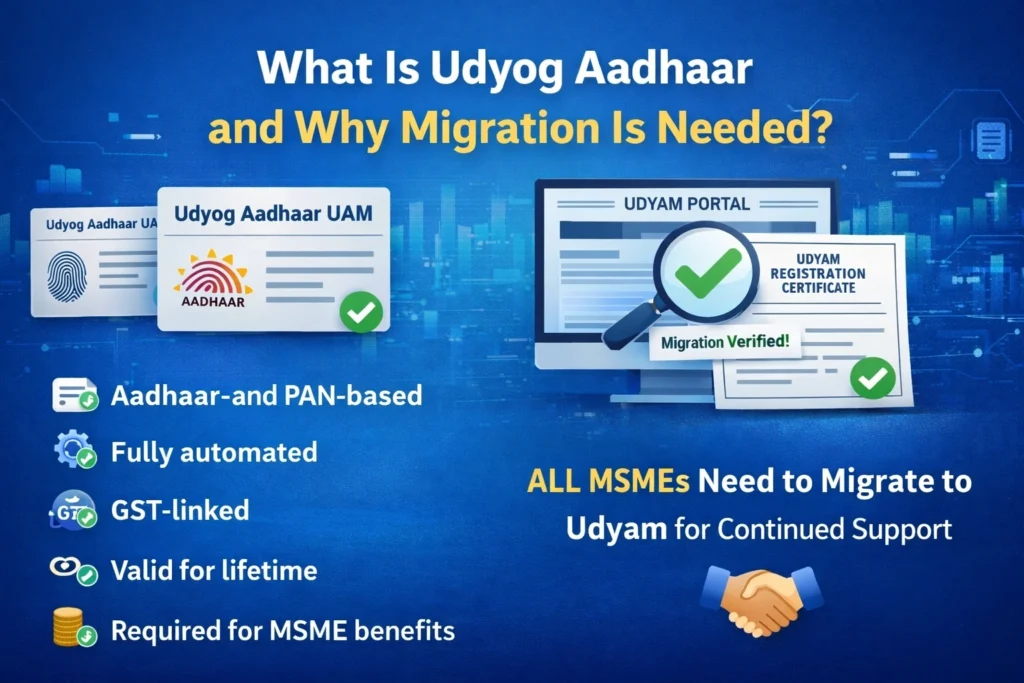
The new system ensures better security and verifiability for businesses.
It integrates seamlessly with government databases, making the entire process faster and more reliable.
Unlike Udyog Aadhaar, which required renewal, Udyam registration remains valid for the lifetime of the business.
For GST-registered businesses, the migration process is even easier, as details are auto-fetched.
A valid Udyam certificate is now required to avail of government schemes, including subsidies and loans.
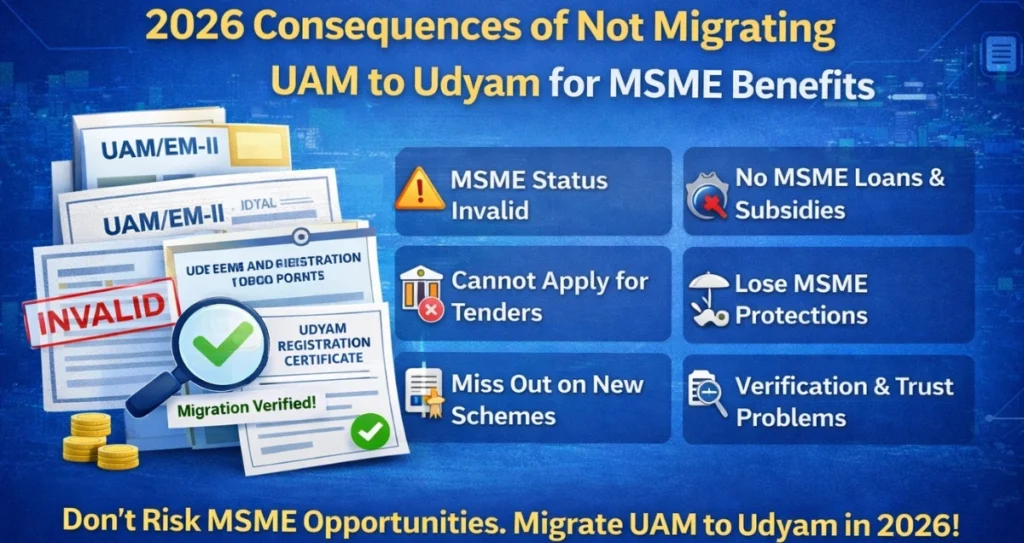
By not migrating, businesses will no longer be eligible for these essential benefits, such as loans, tenders, and subsidies, which are available only to those with Udyam Registration.
Who Needs to Migrate Udyog Aadhaar to Udyam?
You need to migrate Udyog Aadhaar to Udyam if:
Businesses in any of these categories should begin the migration process to ensure continued access to government benefits.
Required Documents for Migration
Before starting the process to migrate Udyog Aadhaar to Udyam, ensure you have the following documents ready:
Having these documents ready will ensure a smoother and faster migration process.
Benefits of Migrating to Udyam in 2026
By completing the process to migrate Udyog Aadhaar to Udyam, businesses gain multiple benefits, including:
Lifetime-valid MSME certificate
Remain recognized under MSME regulations for your entire business lifespan.
Faster loan approvals
Businesses with Udyam registration have easier access to loans at lower interest rates.
Eligibility for government subsidies
Businesses can apply for MSME-specific subsidies, including those under CGTMSE.
Priority sector lending
You will be eligible for priority lending from financial institutions.
Protection against delayed payments
Udyam registration helps you resolve issues with delayed payments.
Participation in government tenders
You can apply for government tenders and even access export licenses.
Completing this migration ensures your MSME stays competitive and well-supported by the government.
Step-by-Step Guide to Migrate Udyog Aadhaar to Udyam in 2026
Access the official Udyam Registration portal: Udyam Registration Portal
On the homepage, select “For those having Udyog Aadhaar (UAM)” to begin the process of migrating from Udyog Aadhaar to Udyam.
Enter your Udyog Aadhaar Number (UAM) along with the mobile number associated with it. You’ll receive an OTP for verification.
Enter the OTP sent to your registered mobile number. If the mobile number is inactive, use Aadhaar OTP verification.
Provide the Aadhaar and PAN details of the business owner or the authorized signatory. PAN verification is a mandatory step.
Confirm or update the following business details:
- Business Name
- Type of Organization
- Business Activity (Manufacturing/Service)
- NIC Code
- Business Address and Bank Details
- Employee Count
Make sure these details are accurate and match the information with your GST records.
For businesses registered under GST, investment and turnover details are automatically fetched. For others, you’ll need to enter them manually.
After reviewing and confirming your details, submit your application. Once completed, you will receive:
- A downloadable MSME certificate valid for a lifetime
- A 16-digit Udyam Registration Number (URN)
Common Issues During Migration
While migrating to Udyam Registration, businesses may face some issues, including:
If the mobile number is not active, the OTP won’t be received. Ensure your contact number is updated.
Ensure that your name and date of birth match across both PAN and Aadhaar.
GSTIN must match PAN and Aadhaar information to successfully link it with Udyam.
If you have multiple Udyog Aadhaar numbers, ensure all of them are linked and migrated properly.
How to Check Migration Status
You can easily check your migration status using your Udyam Registration Number (URN) and registered mobile number through the Udyam portal.
Updating Details After Migration
After successfully migrating to Udyam, you can update your business information at any time, including:
These updates are free of charge and can be made at any time.
Why You Should Migrate Before Applying for MSME Benefits
To avail of various government schemes, such as:
Without migrating, you will be ineligible for these benefits. Therefore, businesses should prioritize migrating from Udyog Aadhaar to Udyam before applying for any MSME-related benefits.
Frequently Asked Questions
Final Thoughts
Migrating from Udyog Aadhaar to Udyam Registration is an essential step for MSMEs to continue receiving government support and benefits. The migration process is straightforward, online, and quick. By completing the migration, your business will enjoy long-term recognition under MSME rules, access to financial assistance, and eligibility for several schemes and subsidies.
If you haven’t migrated yet, now is the time to migrate Udyog Aadhaar to Udyam and ensure your business remains eligible for all MSME benefits and enjoys continued support from the government.