MSME Credit Card 2026: Eligibility, Benefits & Apply Guide!!
Running a small business often means paying suppliers, buying stock and settling bills before customers pay you. Even a short payment delay can create a serious cash-flow problem.
The MSME Credit Card 2026 helps eligible micro enterprises manage everyday business expenses. Officially called the Micro Credit Card Scheme for Micro Enterprises, it offers a revolving credit facility of up to ₹5 lakh.
The scheme was announced in the Union Budget 2025–26 and formally launched in May 2026. It is available to micro enterprises that have completed their Udyam registration. The facility provides 75% credit-guarantee coverage and does not require mandatory primary security.
However, the full ₹5 lakh limit is not guaranteed. The lender will review your business activity, working-capital needs, banking history and repayment ability before approving a limit.
This guide explains the scheme’s eligibility, benefits, required documents, charges and application process in simple terms.
What Is the MSME Credit Card Scheme?
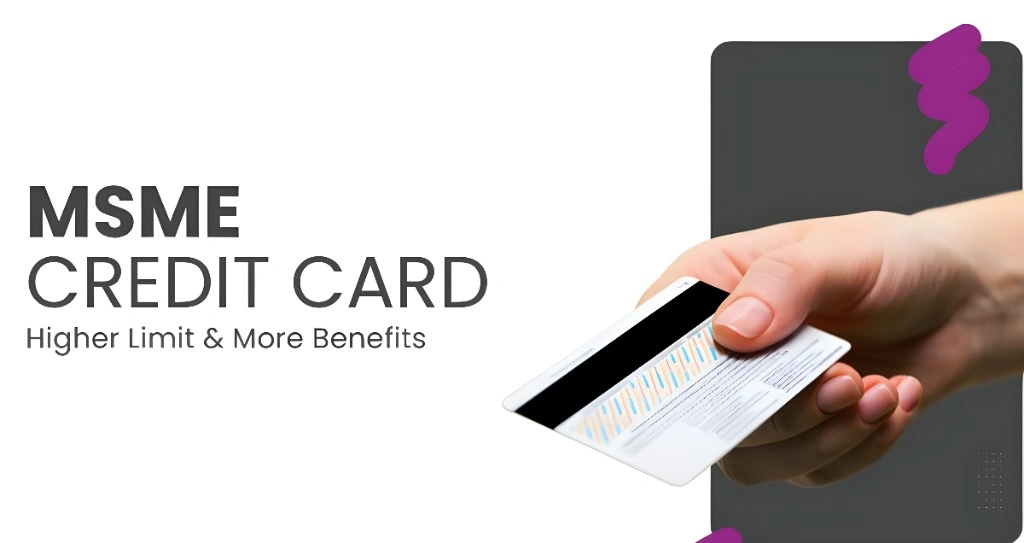
The MSME Credit Card is a business credit facility for Udyam-registered micro enterprises.
It works like a revolving working-capital account. The lender approves a limit, and the business can use money from that limit when required. When the borrowed amount is repaid, the available limit is restored and can be used again.
For example, suppose your approved limit is ₹3 lakh. You use ₹80,000 to purchase stock. Your available limit becomes ₹2.20 lakh. Once you repay the ₹80,000, subject to any interest and charges, the available limit goes back up.
This makes the card different from a regular term loan, where the full loan is generally disbursed once and repaid through fixed instalments.
MSME Credit Card 2026: Quick Overview
| Feature | Details |
|---|---|
| Official name | Micro Credit Card Scheme for Micro Enterprises |
| Common names | MSME Credit Card or ME-Card |
| Maximum facility | Up to ₹5 lakh |
| Eligible businesses | Udyam-registered micro enterprises |
| Type of credit | Revolving working-capital facility |
| Main purpose | Business and working-capital expenses |
| Guarantee coverage | 75% for the lender |
| Security | No mandatory primary security under the scheme |
| Interest rate | Decided by the lender |
| Application platform | JanSamarth and participating lenders |
| Final approval | Subject to the lender’s credit assessment |
The government initially targeted 10 lakh cards during the scheme’s first year. The detailed guarantee framework is valid for three years from the date of the relevant CGTMSE circular, unless changed by the authorities.
Who Is Eligible for an MSME Credit Card?
The basic eligibility conditions are straightforward, but every lender may apply additional credit checks.
The business must be a micro enterprise
Under the MSME classification effective from 1 April 2025, a micro enterprise must meet both these limits:
- Investment in plant, machinery or equipment must not exceed ₹2.5 crore.
- Annual turnover must not exceed ₹10 crore.
These limits apply to manufacturing and service enterprises.
Small and medium enterprises may qualify for other MSME finance products, but this particular credit card is focused on the micro category.
A valid Udyam Registration Number is required
The enterprise must be registered on the official Udyam portal.
Your Udyam record should contain correct information about the owner, business address, activity, PAN and GST details, wherever applicable. A mismatch between the application and Udyam record may delay verification.
Udyam registration itself is free on the government portal. Avoid private websites that look official and ask for unnecessary registration fees.
The money must be required for business use
The card is meant for working-capital and general business expenses, such as:
- Purchasing raw materials
- Buying stock or spare parts
- Paying business electricity and water bills
- Making GST or other statutory payments
- Meeting short-term operating costs
- Paying approved suppliers
- Handling seasonal demand
- Covering temporary cash-flow gaps
It should not be treated as a personal shopping card.
The business must pass the lender’s checks
Udyam registration makes you eligible to apply. It does not guarantee approval.
The lender may examine:
- Bank-account activity
- Digital sales and payment records
- GST returns, where applicable
- Existing loans and outstanding dues
- Repayment history
- Credit-bureau records
- Business turnover
- Working-capital requirement
- Account conduct and cheque returns
A lender may approve a lower limit if it believes the business does not need or cannot safely repay ₹5 lakh.
Only one card is generally allowed
The scheme framework states that one borrower can receive only one ME-Card. A borrower may still use other eligible government-backed credit schemes, provided all relevant conditions are met.
What Documents Are Required?
The final checklist will depend on the lender and business type. Keep the following records ready:
The scheme aims to use digital business data and may not always require detailed financial statements. Still, lenders can request additional information when necessary.
Quick tip: Make sure your name, PAN, Aadhaar, Udyam record, GST registration and bank account use consistent details before applying.
Benefits of the MSME Credit Card
Easy access to working capital
The main benefit is quick access to money for regular business costs. You do not have to submit a fresh loan request every time you need to purchase stock or pay a supplier.
Credit limit of up to ₹5 lakh
Eligible applicants can receive a revolving limit of up to ₹5 lakh. Your actual limit will depend on the lender’s assessment.
A business with a small turnover may receive ₹50,000 or ₹1 lakh, while a larger micro enterprise with strong transactions may qualify for more.
No mandatory primary security
The scheme does not require mandatory primary security. This can help small business owners who do not own property or expensive assets.
The scheme also provides 75% guarantee coverage to the lender. Remember that this guarantee protects the lending institution against part of its risk. It does not cancel the borrower’s responsibility to repay the debt.
Revolving credit facility
You can borrow, repay and reuse the approved limit during the facility period, subject to the account terms.
This can be more flexible than taking several short-term loans.
Digital application and assessment
The ME-Card plan is designed around digital sanction, approval, issuance and disbursement. Digital records can help lenders assess businesses that may not have lengthy financial statements.
Interest is charged on the utilised amount
With a revolving facility, interest is normally calculated on the amount used rather than the full approved limit. Check the lender’s sanction letter because calculation methods and billing cycles can vary.
Better separation of business spending
Using a dedicated business card makes it easier to separate personal and business expenses. It can also improve bookkeeping and help you track payments to suppliers.
Opportunity to build a credit record
Responsible usage and timely repayment can strengthen the enterprise’s credit profile. This may help when applying for a larger working-capital facility or business loan later.
MSME Credit Card Interest Rate and Charges
There is no single government-fixed interest rate for every borrower.
Lenders can charge interest according to their board-approved policies and applicable regulatory rules. This means rates may differ by lender and applicant.
Your rate may depend on:
Before accepting an offer, check:
The early proposal said banks would not charge a processing fee. Applicants should still check the current lender-specific terms because the operational scheme and charges can be updated.
How to Apply for the MSME Credit Card Online
The JanSamarth portal provides information about the Credit Card Scheme for Micro Enterprises. You may also contact an eligible participating bank or lending institution.
Complete or update Udyam registration
Complete your Udyam registration and confirm that your enterprise falls under the micro category.
Check your mobile number, PAN, business activity, address and other details.
Prepare your financial records
Download recent bank statements and keep GST returns, tax records and existing loan details ready. Clear overdue payments where possible.
Good digital records can make assessment easier.
Visit JanSamarth
Open the official JanSamarth platform and look for the Micro Credit Card Scheme or Credit Card Scheme for Micro Enterprises.
Do not apply through an unknown message received over WhatsApp, SMS or social media.
Check eligibility
Enter the required business information. This may include your Udyam number, PAN, enterprise type, turnover and funding requirement.
The platform may verify information through connected government databases.
Choose a lender or proceed with the available option
Depending on availability, you may be shown participating lenders or directed through the application process.
Compare offers where more than one option is available.
Submit the application
Upload or provide the requested documents. Review all details carefully before submitting the form.
Save the application or reference number.
Complete lender verification
The lender may ask for additional documents, conduct a phone verification or verify the business location.
Respond quickly to avoid delays.
Review the sanction letter
If approved, read the sanction letter before accepting the card. Check the limit, interest rate, repayment rules, validity, charges and permitted uses.
How Can You Improve Your Approval Chances?
A few simple steps can make your application stronger:
Tip: If you need only ₹1.5 lakh, explain that clearly. A realistic request may appear more responsible than applying for the full ₹5 lakh without showing a business need.
Common Reasons an Application May Be Rejected
A lender may decline the application because of:
If rejected, ask the lender for the main reason. Correct the problem before applying again.
MSME Credit Card vs Business Loan
| MSME Credit Card | Business term loan |
|---|---|
| Mainly for working capital | Often used for expansion or asset purchase |
| Revolving limit | One-time disbursement |
| Reusable after repayment | New borrowing may require a new application |
| Limit up to ₹5 lakh under this scheme | Loan amount may be higher |
| Flexible business spending | Usually linked to a defined purpose |
| Minimum payment may apply | Fixed EMI is common |
Choose the credit card for short-term and recurring expenses. A term loan may be better for buying machinery, opening a new unit or funding a long project.
Frequently Asked Questions
Final Thoughts
The MSME Credit Card 2026 can be useful for small businesses that regularly face short-term cash-flow gaps. Its revolving structure, limit of up to ₹5 lakh and absence of mandatory primary security make it a practical working-capital option.
Still, it is borrowed money. Compare the interest rate and total charges, use the card only for business needs and repay on time. Most importantly, apply only through official government platforms or regulated lenders.
Disclaimer: Scheme rules, participating lenders, rates and application steps can change. Verify the latest terms through JanSamarth, SIDBI, CGTMSE or the chosen lender before applying.